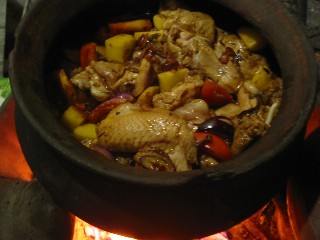
This week and most of next will be very busy for me. Since I’ll be offline, I’m leaving two recipes, those I owe Catsudon and Svelte Rogue. I’m amused at how I do this even on my blog, for this is also how I am in real life. If I have to go somewhere for at least three days, I try to fill up the refrigerator as much as I can for those I leave at home. Oh, the habits that mark our lives!
And so we proceed. Both are meat recipes. I’m not including a vegetable recipe here because both dishes are best served with a fresh green salad, or at least with slices of cucumber and carrots. When proportions are not written, it means you can use as much or as little as you want. So goes the sensual cook!
The first recipe is the shortcut of the Capampangan version of asado. The more traditional version uses larger chunks of meat that are later sliced with multiple steps. This one is more of a stew, for smaller city kitchens and to save on time. It does cut corners but it gives practically the same flavours, minus the smoky taste.
Evidently, by its Spanish name, asado is not unique to the Philippines. In Argentina, this is a large steak. In the Philippines, we have this Capampangan version and the Chinese-style sweetish variant. With this recipe, we use calamansi and tomatoes for the sour-tangy sauce. If out of the country, one can use kumquats or almost any citrus. I used lemons before and it will taste almost the same as calamansi, as long as you don’t use the overripe fruit. Better if you can find lime (dayap) which you can use as a dip later on. Asado can be chicken, pork or a combination – or beef. Dry it out a bit if you like it Chinese-style.
Asado
½ kg. chicken
½ kg. pork
garlic, finely crushed (as much as you want)
onions, sliced lengthwise
5-7 medium tomatoes, diced (scoop out as much of the seed as possible, so your stew isn’t too acidic)
8-10 calamansi or lemons
soy sauce
Worcestershire sauce (not too much)
2 large or 3 medium potatoes – cut in half if medium, quartered if large
bay leaves
oregano
whole cloves (if available)
cooking oil (olive oil would be the best choice but not necessary)
- Marinate meat and potatoes in soy sauce, Worcestershire sauce (4-5 tablespoons initially, add more later if desired), lemon juice, two medium tomatoes, bay leaves, oregano and cloves. Ideally this is done overnight or for a minimum of two hours.
- In a deep pot, sauté garlic (till light brown, then add) onions and (after onions become transparent or seem to melt) tomatoes. Put in meat and turn well to seal and brown all sides. If using both chicken and pork, sauté pork first then add chicken when pork has been half-cooked. Or add together then take out the chicken while the pork is still cooking. The latter is a bit more tedious but with better results.
- Upon browning all sides, pour in the marinade.
- If using pork only, make sure you occasionally add half a cup of water since pork dries up faster. If chicken only, don’t add water since the fowl’s natural juices make water less necessary. But check now and then to make sure your stew doesn’t stick to the pot.
- Add the potatoes. Once they’re done but the meat isn’t tender yet, take them out, add a little water, and simmer till tender. You can also thicken the sauce by mashing two to three pieces. Potatoes usually absorb saltiness of the dish. Add soy sauce if needed.
If it is to be eaten with rice, asado is best served with a dip of lime, Worcestershire sauce and a bit of soy sauce. This is almost like the marinade but fresh, not cooked. Fresh lime also adds some tangy zest as a contrast to the mellowed sourness of the cooked dish.
P.S. Add half a cup of water as you simmer. Keep on adding as the pot dries out.

 The Pilgrim's Pots and Pans
Leave a comment