Perhaps it’s now too late to back out of this blog. I realised that what I want to accomplish entails a lot of archival and field research, not to mention some testing of recipes from long ago, perhaps not cooked for at least a generation. However, the more I think about it, the more excited I get. This not only feels like a trip down gastronomy lane but an anthropological study as well. I have already had a few eureka moments in the last few days.
For the past week or so, I have been asking my mother for information about food that I have not heard of for sometime. In her usual lucid and detailed explanation, Mom would describe ingredients, procedures and implements that are traditionally used in Capampangan cooking. Sometimes, a few minutes of our conversation would be worth at least three blog entries. Right now, I have already made a list of field trips that I need to go to, farms and produce that I need to photograph, people I have to interview and so on and so forth. In a way, just planning the articles has made me more aware of my roots. Just the other day, even all by myself, I had a lesson in etymology.
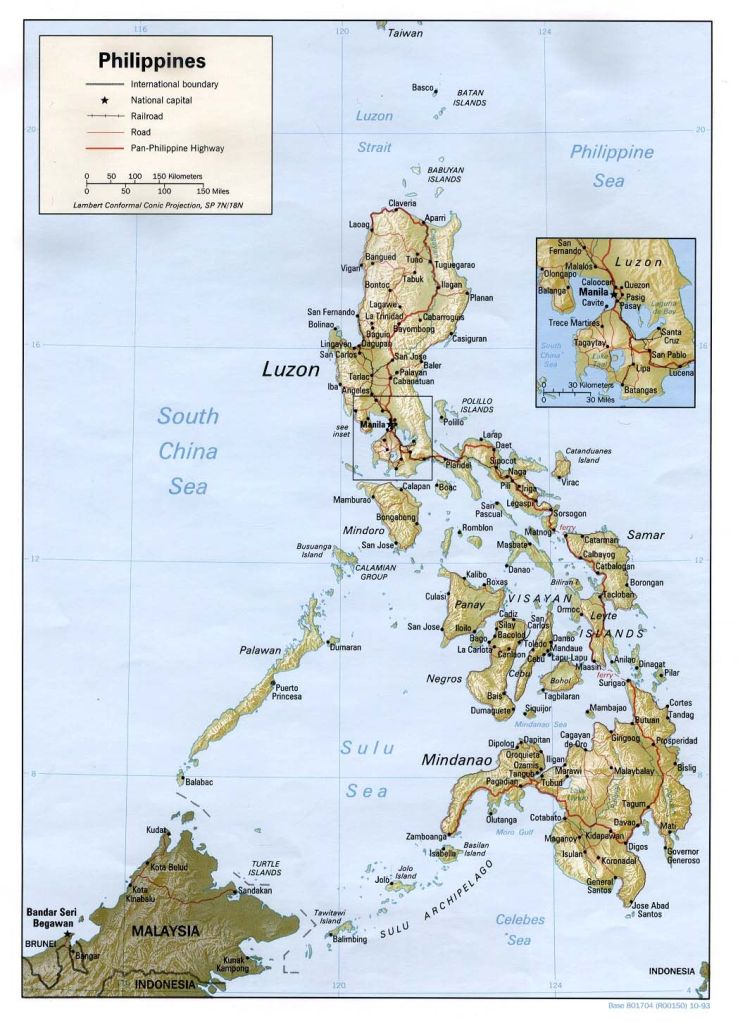
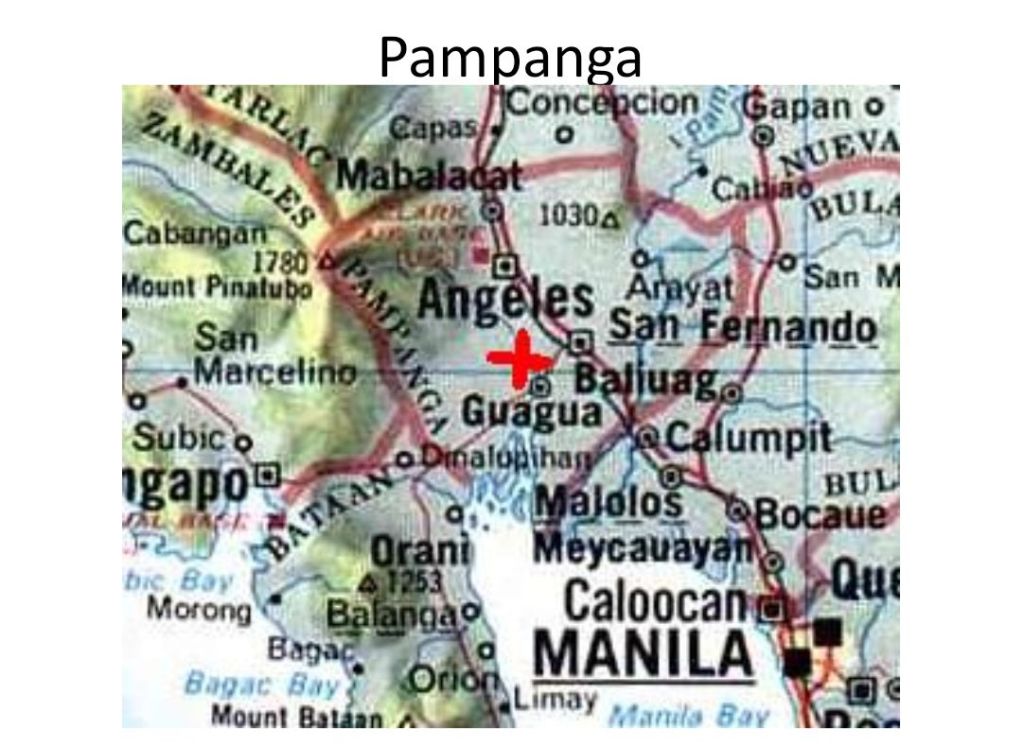
I’m posting the maps with this entry since I now realise that I keep on talking about Pampanga as if everyone knew where it was. From the number of surf-in readers, perhaps some would not even know where the Philippines is. To be concise, our country is in Southeast Asia and Pampanga is within the central plains of Luzon island. Pampanga used to have haciendas planted to sugarcane, reflected in our fine confectionery. Since the province was the seat of national government for sometime during the Spanish period, its cuisine has incorporated indigenous, colonial and other Asian facets. And living close to rice paddies and bodies of water has led Kapampangans to experiment with exotic cuisine. Delicacies include tugac (frogs), camaru (mole crickets), tagilo or balo-balo (fermented rice with shrimps or fish), turrones de casoy and many more.
Having lived in Pampanga for most of my childhood and early adolescence, I will start with Kapampangan recipes I’m familiar with. I am by no means limiting myself to this cuisine, nor to Filipino cooking for that matter. I would just like to begin with something I can cook with my eyes closed, most probably due to onion tears. Every now and then, if circumstances permit, perhaps we can venture into the food of other regions. You can always tell me what you fancy.
For this entry, I’ve been debating with myself on what type of recipe to post. Everyday food? Fiesta fare? Exotic cuisine? Too many choices. What would you like to eat?
Maps from Rand McNally map of Luzon from CalState Hayward and University of Texas Perry-Castañeda Map Library

 The Pilgrim's Pots and Pans
Leave a comment