In one of my previous incarnations as a junior government bureaucrat, I was travelling all the time yet hardly saw the places that I went to. However, not having enough time to go around did not stop me from visiting the marketplace or the grocery just to have a feel of the daily life of the populace. I would also eat where locals go and sample their fare. If I only knew then that I would be maintaining a food blog! Sigh!
Among the places that has my heart (and stomach) captured is Rome. Whether in the office canteen, the trattorias or ristorantes, I was fascinated with the simplicity and freshness of the cuisine. Even as I was preoccupied with work, at the back of my mind I was trying to dissect what I was eating such that I could cook them myself. I’ve always been partial to red sauces for my pasta and in Rome I learnt of combinations that I wouldn’t have come up on my own. Returning home, I recreated some of the recipes which I now regularly cook. Following the same principles, I have also come up with my own recipes.
While craving for pasta the other day, I just realised that there seems to be a dichotomy in my cooking – Filipino food using native implements and western or Hispanised food in metal pots and pans. Hmmm… time to think out of the box. So one afternoon in Quezon City, as I was preparing to go home to Santa Rita, I thought of cooking pasta sauce in a bâlangá (palayok or clay pot) over a wood-fired stove. It never occurred to me before but an earthen vessel would be the best for the slow simmering needed to bring out the flavours of pasta sauces.
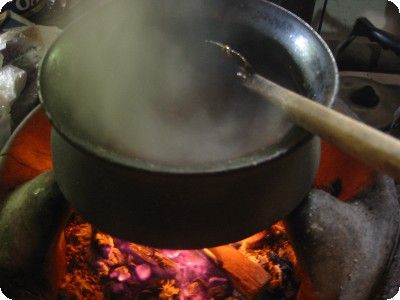
My obsessive-compulsive tendencies got the better of me as I debated which vessel should it be, a bâlangá or a cúran? The difference between the two is that the former has a wider opening. I’ll devote a whole entry on this later on, when I finally figure out why Lola insisted that particular dishes had to be cooked with one and not the other. Anyway, I settled on a bâlangá. Lola didn’t cook pasta sauces and I’m in no danger of being castigated by her ghost.
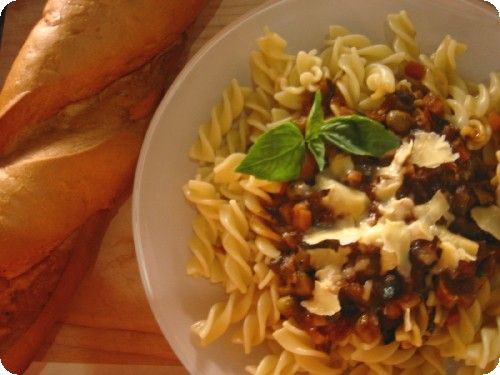
The pasta sauce is a combination of vegetables that I like and thought would taste good together. I would have added some olives and capers but I wanted it to taste relatively simple. It seems like a clay pot over a wood-fired stove indeed worked well for the sauce. It tasted better on the second day as the flavours melded well, mellow yet full.
Pasta Sauce in a Clay Pot
½ kg. ripe tomatoes, peeled and de-seeded
1 cup pureed tomatoes or tomato sauce
2 large carrots, sliced into small cubes approximately the size of the peas
2 large courgettes (zucchini), cubed in the same size as carrots
1 cup button mushrooms (fresh or canned), sliced thinly
½ cup sweet peas
2 heads garlic, finely crushed
3 small onions, sliced thinly
handful or two fresh basil, finely torn or sliced
2 tablespoons olive oil
½ cup red wine
thin slivers of cheese (for this recipe, I made use of leftover Queso de Bola or Edam cheese)
1 cup water
salt to taste
Heat oil in a clay pot over medium heat. Fry the onions then add the garlic and then the tomatoes, salt and half of the basil. Simmer for around 20 minutes, adding a few tablespoons of water and stirring occasionally. Pour the tomato puree then simmer for 5 minutes
Put in the carrots, simmer for two minutes, the button mushrooms, the courgettes and then a few tablespoons of water. After simmering for around 5 minutes, drop the rest of the basil and around four tablespoons of cheese. Simmer for another ten minutes, pour the wine and simmer for around 5 minutes then turn down heat. I just let the pot simmer with embers.
Serve over fusilli (spirals) pasta and drizzle with cheese.

 The Pilgrim's Pots and Pans
Leave a comment