
Perhaps I’ve come close to solving the puzzle why we call sitaw (also spelled sitao in Tagalog, câmangyáng in Capampangan, utong in Ilocano and Badiriya in Lebanese Arabic) stringbeans while to many parts of the English-speaking world, they’re yard-long beans. I came across a paper from the American colonial period where they were most probably writing the English translations for our native vegetables and what did they call sitaw but “long stringbeans” (trust the Americans to leave us confused, hehehe!). Perhaps through time the adjective was dropped and so we are now left with just “stringbeans”. Now I’d like to pinch my own ears because I forgot to write down the source of the paper and have no idea where I read it. Pardon my negligence this time.
In any case, here is another recipe which makes use of these beans. I was a bit hesitant to post this recipe as it is quite common, most probably found in all Filipino food websites. However, I am a bit amused at requests for me to post a Capampangan pinakbet recipe. What recipe? Pinakbet is unmistakably Ilocano. The way it is properly cooked, according to my mom and aunties who lived in Baguio at some point in their lives, is by stewing without oil until the vegetables have dried up and shrivelled. But since requests persist and I promised Renee on Shiokadelicious! sometime back, I will post how Capampangans cook it, which I’m certain would make hardcore Ilocanos cringe.
In this take, I am using baguc or bagoong alamang (salted shrimp fry paste), instead of the Ilocano bagoong monamon or salted fish paste. In true Capampangan fashion, I also add bits of pork, shrimps and shrimp extract. That is why I call it semi-elaborate. But semi- only because in this recipe I forgot to add pork cracklings (chicharon) and some smoked fish (tinapa) which we cook it with now and then.
Not quite like the original it may be but our regional adaptation is just a testament to how versatile this dish is. There are other versions in other provinces such as in the Bicol region where I think they cook it with coconut milk to suit their taste.
Semi-Elaborate Pinakbet
1/3 kg. yellow squash, approximately a heaping medium plateful, sliced into cubes
1 long bitter gourd (ampalaya or amargozo), sliced into flat triangles
a bunch of sitaw (yard-long beans)
8-10 pcs. okra (medium-sized)
4 long aubergines (eggplant)
1 ½ cups diced tomatoes
3 long green chillies (larang macaba or siling haba – optional)
2-3 tbsp garlic, finely crushed
2 medium onions, finely sliced
a knob of ginger, roughly crushed
1 cup fresh shrimp extract
½ cup bagoong alamang (shrimp fry paste)
¼ kg. diced pork or slivers if you wish
2 tbsp lard or cooking oil
water

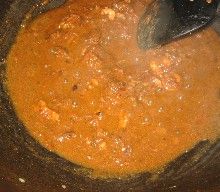
In a deep pan, heat the oil and fry the garlic till golden brown then add the onions till transparent. Add the ginger and then the tomatoes. Simmer till it is a pasty consistency then stir in the shrimps then the bagoong and let dry to ‘toast’ the mixture.
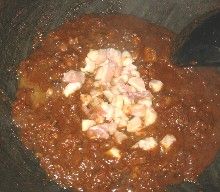

Stir the pan to keep the mixture from burning then pour in the shrimp extract. Again, let it ‘toast’ and pour in a tablespoon or two of water if it gets too dry then add the pork. When the pork has become tender, put in the squash and the chillies. You can add the chillies later if you don’t like the pinakbet spicy or even omit completely.
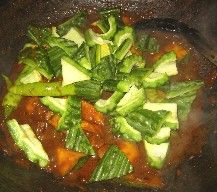
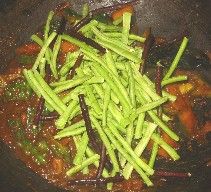
After around five minutes, add the bitter gourd, let it sweat till half-cooked then add the beans. At this point, the small slices of squash have become very tender and tend to thicken the sauce.

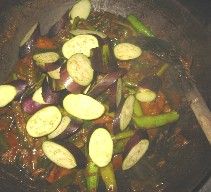
When the bitter gourd and the beans are around 3 minutes from being done, put in the okra. Stir gently, then sweat for a minute then add the aubergine. Pour in a small amount of water if it becomes too dry. Simmer gently then test all the vegetables for doneness. Turn off the heat and cover the pan for a few minutes before serving.


 The Pilgrim's Pots and Pans
Leave a comment