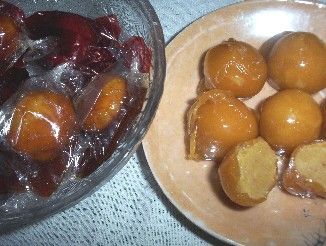
Between sweet and savoury, I’d pick the latter but when Debbie at words to eat by announced caramel as this month’s theme for Sugar High Fridays (SHF), I thought it was too good to pass up. SHF is a spin-off of the now-famous IMBB? and was created by Jennifer at the Domestic Goddess, and I’m entering an entry for the first time.
And so I began my (mental) search for a recipe. Caramel, oh caramel! Something commemorative although it’s two days after 16 March.
Filipino schoolchildren know the date 16 March 1521 is when Magellan landed in what he called the Archipelago of St. Lazarus. It was not until 1565 that the islands were colonised and subsequently named after Felipe II. Thus began three centuries of Spanish rule in the country now known as the Philippines.
Philip II was a Catholic king who not only concerned himself with the temporal but also the spiritual affairs of his subjects. It was this fervour which made the conquest of the Philippines that of the Sword and the Cross.
With every new settlement, parishes were established and the church building was central to town planning. To build a church, the whole town was mobilised; the able-bodied men contributing labour while women did other chores.
Back when there was still no cement, indigenous materials were used. A lime mixture (compounds of calcium, not the citrus) combined with egg shells and egg whites, among others was applied to the walls to make it more durable. One can imagine how many thousands of eggs were used for one massive building. Since only the whites were used, the egg yolks had to be utilised as well. Thus we have various egg-based recipes, mostly desserts, such as leche flan and yemas.
And so yemas it is. Yemas is the Spanish word for ‘egg yolks’. However, in the Philippines it now means a custard candy. In our province of finicky tastes, yemas are always caramel-covered, otherwise they would just be another kind of pastillas, usually milk-based candies.
Although I still adhere to this rule, I have never made any of these candies unsupervised. This means I was not yet ten years old the last time I helped out in making yemas. It also wasn’t at home; I do not remember my mother or grandmother with this undertaking. It was from my aunties, my mother’s cousins, that I learnt this recipe from.
My aunties in the barrio (village) have very exacting standards for cooking. They have never written down recipes but the consistency of their cooking has not wavered. So when I decided on this recipe, I crossed my fingers that I don’t fail.
The ingredients I list below are what I remember them to have used. As far as I know, the caramel was just sugar and water and it turned out light and brittle. My first attempt was a disaster, and so I tried adding some shortening, thinking how peanut brittle tastes. Somehow I got the right consistency but one of these days, I’ll go back to the barrio and ask.
Yemas (Caramel Custard Candies)
Custard
1 300 ml. can sweetened condensed milk
8 egg yolks (10 if milk is too sweet)
zest of 2-3 limes, grated
Caramel
250 ml. (1 cup) sugar
75 ml. water
50 ml. butter or shortening
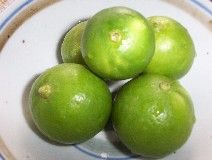

In a mixing bowl, beat the egg yolks well. Wrap the lime zest in a cheese cloth and moisten with the beaten eggs. Squeeze to extract essence; repeat thrice. After squeezing for the third time, moisten the cheese cloth with a tablespoon of water, rinse and squeeze. The water can then be added to the beaten eggs.
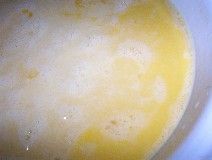
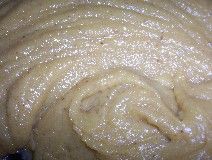
Add the condensed milk to the eggs and mix well until fully combined. I used a hand mixer for this. Pour into a heavy pot over very low heat and stir constantly. The brown specks on the picture means this cook underestimated the fire. It’s not bad enough to taste burnt but I am sure to be lectured by my aunties if they see this.


Stir until thick and dry. You would know when to stop stirring when your arm socket is about to pop or if the mixture won’t budge, whichever comes first. The consistency should be similar to that of a cheesecake. Transfer to a plate and let cool. In the meantime, cook your lunch or supper, do the laundry or ponder the meaning of life. Upon cooling, form into balls. You can then start working on the caramel.
Combine sugar, water and butter/shortening in a heavy saucepan. Place over low heat and stir until the water and butter envelopes the sugar. The water will eventually dry out, leaving plain sugar coated with butter. Still on very low heat, wait till the sugar melts into golden brown syrup. Remove from heat, otherwise you’ll be sorry, trust me on that.
Pardon me, I don’t have pictures for this. I couldn’t leave the pan to take photos. The caramel proved trickier than the custard.

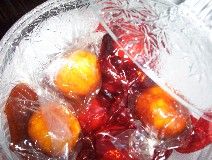
Dip each ball into the caramel and quickly retrieve and place on a lightly greased plate or cookie sheet. Let cool and wrap with cellophane if desired. The candies are now done but that doesn’t mean you can relax. The pans still need to be washed.
While resting however, you can reflect on the candy. The textures are contrasting – firm and smooth on the inside, crunchy on the outside. The heaviness of the milk and eggs is subtly played against by the lime zest, preventing it from becoming cloyingly sweet. Seldom is this found in a confection so rich.
Now there is no wonder in my mind why my mother and grandmother didn’t attempt this at home. I don’t know how my aunties did it. Although I eventually got the right consistency for the caramel, I think they’re still a bit on the moist side. On hindsight, some peanut brittle recipes use baking soda. Perhaps that should stabilise the caramel. I wonder if my aunties use that. There’s only one way to find out.
Thank you Debbie, for thinking and hosting this edition of SHF. My whole arm, especially the wrist, is still complaining but that means I still have that ‘discipline’ from childhood. I’m using the right muscles after all.

 The Pilgrim's Pots and Pans
Leave a comment