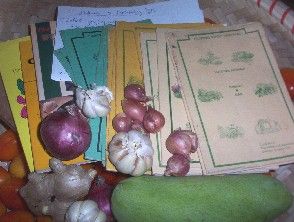
They don’t look much (especially with a bad photo) but trust me they are worth their weight in gold. Those are what I unexpectedly received last Easter while my auntie was cleaning out her cabinets. One by one the books came out. And these were not just cookbooks! They’re cookbooks that seem to have been written specifically for this blog.
What am I talking about this time? Within the pages float such exotic words: Baguisen, Bisukol, Nilaneg, Binagis, Sinukmani, Kandinga and Binakol. If you don’t recognise any of those dishes, how about Sagaksak, Lauout-lauot, Tiolah Sapi, Tangkong Linambonan, Paklay and Nilubihang Munggo. These are recipes from the Filipino Food Festival series published by the Department of Agriculture in May 1990. The booklets are on mimeographed white-wove paper but they’re precious! They are supposedly representative of food from the different Philippine regions.
On the Foreword, the then Director of the Bureau of Plant Industry, Nerius I. Roperos wrote:
“The traditional Filipino foods have been slowly disappearing in the Filipino food pattern and gradually being replaced by foreign food products.
“It’s a pity indeed and to think that they are as nutritious and are easily available to feed a nation.
“The series of publications of the regional traditional foods hope to bring back into focus the revival of our native dishes. So, that in so doing, even our children’s children will still be aware of what is truly the Filipino palate.
“Food experts from the bureaus and agencies under the Department of Agriculture met several times to make a compilation of the recipes indigenous in different parts of the country.”
There’s more! From one of her uncles, auntie inherited a 1926 vintage Mrs. Morton’s Cook Book. How’s that for an authentic relic from the American occupation? It’s now mine.
Aside from the above, auntie thought I could make use of several other cookbooks and a scrapbook of recipes handwritten and clipped from newspapers that spans several decades. Who’s the lucky one?

 The Pilgrim's Pots and Pans
Leave a comment