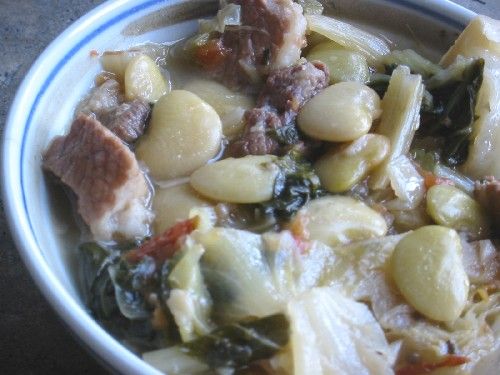
Pork & beans stewed in tomato broth
One very Filipino trait I notice is the preference for soupy or saucy dishes. A traditional meal has a soup that does not have to be separate from the entrée. The classic sigang and tinola are good examples. However, we also do not serve dishes in a sequence, like soups and appetisers, salads, mains and so on. But that’s a topic for another day.
Soupy and saucy dishes are a contrast to the blandness of rice which is the backbone of every meal. More often than not, the soup or sauce is poured on and mixed with the rice. In Capampangan we call this ambulâ. In our house, this has become so ingrained that when we cook, we deliberately add more liquid just for the pánambulâ.
The recipe below is an example of a soupy dish I grew with. The counterpart from other regions that I’ve seen is called kinamatisan but they do not seem to add beans to the soup. For us, these are essential to the recipe. Lutung Camatis â Babi – literally pork cooked in tomatoes – is a flavourful blend of slow-simmered meat and still-crunchy vegetables. This dish is versatile enough to be adjusted to individual preferences. Some prefer it to be mostly meat. In our family, we are not very avid meat eaters so what we do is to cut the pork into small cubes and add more vegetables. Every now and then, we also use bulig (dalag or mudfish) instead of pork.
I’ve seen a version of this dish which has a lot of beans in it that it’s already similar to the Spanish fabada. The beans we use are similar to lima beans except that they’re flatter and wider. They are called bulé baluga – bulé means beans in Capampangan and baluga referring to the indigenous Aetas who come down from the mountains bringing us the yearly supply. I know that the term is supposedly not politically correct anymore when referring to people but that’s how we’ve always called these beans. I’ve also been told by our visiting Aetas that they’ve always referred to themselves by that name that they don’t feel slighted when hearing it. However, I guess it also depends on which tribe they’re from. I digress.
Fresh bulé baluga are in season around December and January. However, Capampangan kitchens of old always had dried beans on hand. This is a testament to the foresight of those who ruled them, usually the women.
On these cold and rainy days, a lunch of Lutung Camatis â Babi is enough to keep me warm the whole day. Go ahead, cook a pot and enjoy!
Lutung Camatis â Babi
1/3 kg. pork cubes (any cut, mix fleshy parts with some bones)
1/2 cup dried bulé baluga, soaked overnight (patani or lima beans Phaseolus lunatus)
1 small cabbage, approx. 6 inches in diameter, sliced into thin wedges
1 bunch pechay (Chinese cabbage – Brassica chinensis), sliced in half cross-wise
1 medium radish, peeled and sliced diagonally (1/2′ per slice)
1 cup diced ripe tomatoes
2 tablespoons garlic, crushed
1 tablespoon cooking oil
salt to taste
4-5 cups water (approx.)
Sauté garlic till soft (guising saguiwa). Add the tomatoes and a pinch of salt. Over low fire, let the tomatoes sweat by simmering till very soft, breaking the lumps with a spoon every now and then. Make sure to cover the pot while simmering.
Add the pork, cover the pot and simmer. After around 5 minutes, pour in half a cup of water and simmer for at least 30 minutes over very low fire. When half-done, add the drained beans and another cup of water. Do not stir before the pot simmers. After 30 minutes under very low fire, check the beans. Add small amounts of water to prevent the mixture from drying up.
When the beans are almost done (tender but still a bit raw inside), add the radish and cabbage, simmer for 2 minutes then put in the pechay, stalks first then the leaves after a minute or two. Adjust the taste by adding a bit more salt if desired. Simmer for around two minutes until all the vegetables are done.
We love eating this on the second day, when the vegetables have melted into the soup after being reheated several times. We then add another batch of fresh greens.
Serves 3-4 persons if served alone with rice.

 The Pilgrim's Pots and Pans
Leave a comment