[This was previously posted on this blog with accompanying sisig recipe. It was subsequently slightly revised for SunStar-Pampanga’s street copy.]
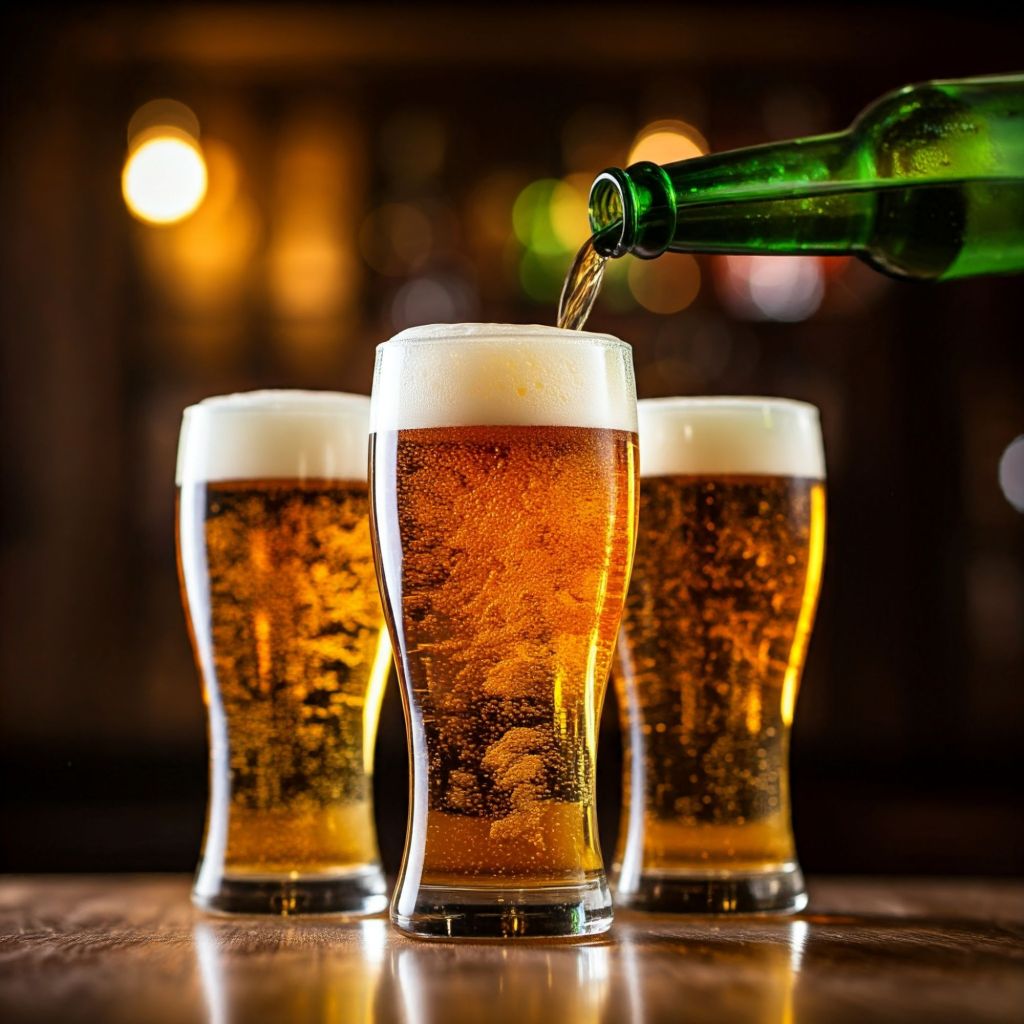
In less than a month, Angeles City’s Sisig Festival is sure to gather its die-hard fans. Aside from the superb food and entertainment, drinks will be overflowing of course! I can just imagine the bottles and the kegs of wine and spirits that will be consumed for the duration of the event. I know of some groups of friends who are looking forward to this occasion. Siguradung ngeni pamu, masigla na ing pamagsadya.
Gaiety and spontaneity are trademarks of most Filipino societies. Being very sociable, camaraderie is at the heart of many relationships. Perhaps it also comes from the nature of our traditional occupations – farming and fishing. Our ways of living rely on being with others, helping and sharing in the labour and the harvests.
This camaraderie is even more apparent when unwinding after a day or night’s toil. It is then when beverages come out. And when there are spirits, of course there is pulutan!
First a note on Filipinos and drinking. Here I shall liberally employ quotations from my favourite Doreen Fernandez resource. Tikim has an essay on the subject with the very explicit title A Conversation with Fray Juan de Oliver on Drinking and Drunkenness. It is an exposition on what the early missionaries in the archipelago wrote of when they saw men drinking. Fray Juan de Oliver, O.F.M. thought the menfolk imbibed tuba (his generic term for our native spirits) day and night, in excess until they threw up (in Declaración de la Doctrina Christiana en Idioma Tagalog, ca. 1583-1591).
That of course is being too hasty. Doreen opines: “His and other friars’ European minds, used to certain hours for drinking (at meals, after hours) must have been boggled by people drinking in the morning, afternoon and evening… Oliver almost certainly did not realize that drinking hours are set by people’s work schedules. Fishermen drink when they come in from the sea — some in the morning, others in the afternoon or evening. Farmers drink after work in the fields. Everybody drinks at fiestas. There were no professionals and no office hours then, and thus no “after-hours” drinking as we know it today, “after [work] hours being possible all day.”
Francisco Colin, S.J. thought so too (Labor Evangelica, 1663). “They eat sparingly but drink often; and when they are invited to a banquet, they are asked not to eat but to drink,” he says. The natives engage in long drinking sessions yet are still fully functional, still working on their trade. “And if he has occasion to buy or sell, and to examine and weigh gold or silver he does it with great steadiness that the hand does not tremble nor does he make any error in the weight,” Colin finishes.
I was impressed with how Doreen set what she calls the “conversation between centuries” between Fray Oliver and Fr. Colin. She muses on setting the old friar straight on his views, that “the community drinking of Filipinos, although frequent and of long duration, is not necessarily drunkenness.” It has a lot to do with community drinking, and the technique of tagayan or having a leader (tagatagay) pour the libation into a glass then passing it around.
Then there is pulutan, also called sumsuman and recorded in Pedro de San Buenaventura’s Vocabulario de la lengua Tagala (1613) as “polotan” and much later (1860) defined by Noceda and San Lucar as “a type of snack which one eats while drinking wine”. This is food specific to drinking and is to be eaten with companions.
There are many preparations for many species eaten as pulutan but what I thought to be common is to have something with meat. My own mother taught me a trick when I was old enough to drink. Never drink when hungry and before imbibing anything, eat something fatty such as chicharon to coat the stomach’s lining, preventing the absorption of alcohol. To this day, I have never had a hangover but then again, I’ve never strayed away from wine. I suppose eating something oily does make sense.
Truly, Filipinos love to drink. We have mastered the art of drinking without getting drunk. This must’ve gone hand-in-hand with perfecting the art of the pulutan.
Now, do I hear the sisig calling?

 The Pilgrim's Pots and Pans
Leave a comment