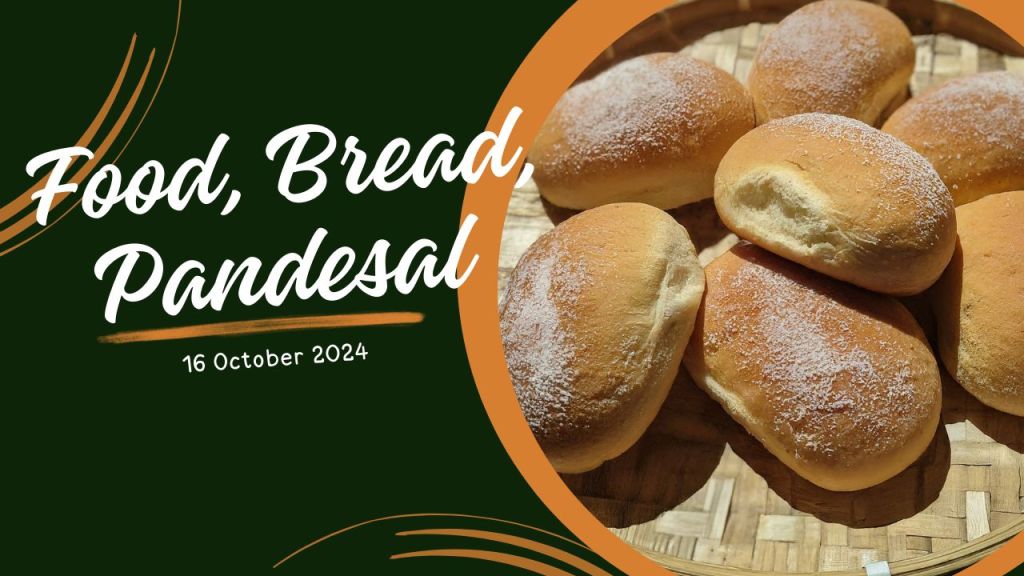
October 16th is World Food Day. It is also World Bread Day and for Filipinos, it is World Pandesal Day. These three observances are all related.
Established in 1979 by the Food and Agriculture Organisation (FAO) of the United Nations to remind the world of humanity’s responsibility to combat hunger and to ensure food security, World Food Day has inspired many similar events. One of these is World Bread Day which was started on 2002 by the International Union of Bakers – Confectioners (UIBC) and the German Central Association of Bakeries. World Bread Day is meant to highlight one of the world’s most traditional foods – bread – and the skill of the bakers who produce it day after day.
In 2015, the Philippines through Kamuning Bakery, led the first annual celebration of World Pandesal Day. It is to help Filipinos and the world remember the humble yet iconic pandesal as the bread that sustains us. This bread is found all over the archipelago, has been passed down through generations. It is eaten by the toiling masses, the middle-class and essentially people from all walks of life. This simple bread is eaten on its own, or with just coffee. But it can also be extravagant with any palaman one wishes to fill it with. Pandesal is both Filipino nourishment and comfort food. It’s a testament to the country’s rich culinary heritage that combines traditions from the East and the West.
Each year on October 16th, three seemingly separate events come together to remind us of inter-connected concerns. World Food Day emphasizes the importance of the accessibility of nutritious food for everyone. This is very a very important commemoration in the Philippines, where a good percentage of the population find themselves suffering from involuntary hunger. Food security is a major concern in the country, when even as an agrarian society, we are not yet even close to self-sufficiency as far as rice and basic food commodities are concerned.
World Bread Day celebrates the universal nature of bread. One may ask why Filipinos should even be giving this occasion some importance, when rice is the primary staple. Bread, however, has played a significant role in the country’s food cultural and cultural interactions. There are bakeries in almost all towns from Luzon to Mindanao, perhaps even specialty bakeshops in more prosperous locales. Books have even been written about regional and ethnic breads and pastries. This shows the importance of bread in the life of Filipinos. Bread, like rice in the Philippines, is a staple food in many other cultures and has helped to ensure food security for many peoples throughout history. Celebrating World Bread Day is one way to raise awareness about its importance in global food security.
World Pandesal Day highlights a specific cultural expression of this very important food. This bread is exceptionally versatile. It can be eaten plain or as a base for more substantial sandwiches, even upgraded for fancy canapés. On the national level, through the decades, the pandesal industry significantly contributes to the Philippine economy by providing livelihoods for countless people involved in its production, distribution, and sales. In the international arena, celebrating World Pandesal Day promotes the appreciation of Filipino culture by allowing others a glimpse of our lives and our cuisine.
So, the next time you enjoy a slice of bread, whether it’s a humble pandesal or a fancy brioche, remember the interconnectedness of these three special occasions. They’re a celebration of food, culture, and the simple joy of eating.
How about you, what’s on your plate today? Or what do you have in your pandesal? Share your stories!
To learn more about World Food Day, food security and fighting global hunger, visit the website of the Food and Agriculture Organisation – http://www.fao.org.

 The Pilgrim's Pots and Pans
Leave a comment