A few moons ago, Lynn and I had a short exchange on the comments box of her Five Minute Pao post in her blog To Short Term Memories. It was actually the related posts Chive Pao and Chive Boxes that made me mention my search for the herb.
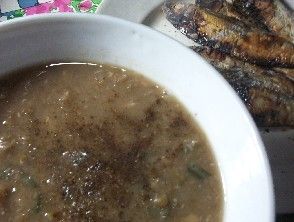
I had long wanted to cook Sabo Balatung (mung bean, munggo or monggo soup) the way I remember it from childhood. This is a dish which is practically the same in the whole country, with regional or provincial nuances. In Manila and most Tagalog provinces I’ve been to, it is known as ginisang munggo (sautéed monggo), a very thick bean stew. To most Capampangans, it’s a thick creamy soup. The difference lies first of all, in the technique of running the cooked beans through a sieve. This separates the soft flesh from the somewhat tough skin.
Another difference I notice is how we mainly use cusé or garlic chives (Allium tuberosum – regular chives are Allium schoenoprasum) for the greens while in Manila they use camaluñgge (Tag. malunggay – Moringa oleifera) or tender leaves of bitter gourd – we do too but not as often as chives.
Like the Capampangan sigang, we also don’t use tomatoes. At home and in other households I’ve been to, the soup is traditionally served with broiled tuyo or dried salted fish. To polish it off nicely, we also season the soup with a splash of vinegar and a dash of black pepper.
Perhaps it’s a matter of conditioning or personal taste but for me, I prefer our sabo balatung over other versions. One of the reasons is how in balatung that has not gone through a sieve (e megasgas), I can detect a hint of lanam from the skin of the beans. Having some tomatoes are not a problem to me but without them I can customise it better such as adjusting the acidity with vinegar better.
For relatives and friends abroad who have a craving for this soup but have a difficulty finding mung beans, I suggest using lentils and spinach for the greens instead. It will not be the same but will approximate the taste. Pair this with a good quality sausage and life is good. I got that idea from a meal at the old Bundeshaus (Parliament) in Bonn.
In any case, again for the sake of documenting taken for granted everyday dishes, here’s how most Capampangans cook mung bean soup.
Sabo Balatung: Mung Bean Soup
1 cup dry uncooked green mung bean (Vigna radiata)
1/2 cup shrimps, shelled (or pork) (and/or)
1/2 cup baguc (bagoong, salted shrimp fry paste)
(or you can substitute pork strips or flaked fish)
1 cup chicharon (pork rind/cracklings)
2 tbsp. garlic, finely crushed
2 medium onions, finely sliced
2 bunches chives, minced
1 tsp. lard or cooking oil
salt to taste
2-3 cups of water

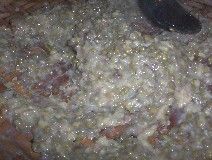
Soak mung beans for at least 30 minutes and then rinse well. Boil till tender and set aside till cool enough to handle. Then transfer to a coarse sieve such as the biqse (Tag. bistay) or bamboo tray sieve.
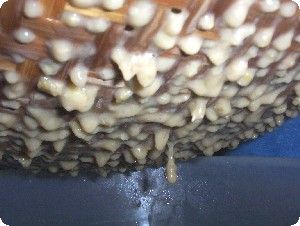
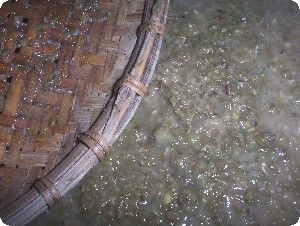
Pass through the sieve to render a creamy consistency, pouring water now and then. It’s acceptable to have some of the skin pass through the sieve.
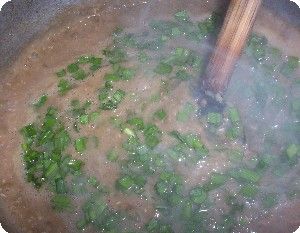
In a pot, heat the lard or oil then lightly brown garlic, then add the onions. Add shrimps and/or bagoong (and/or the other substitutes) then “toast” till well-cooked. Pour in the creamed mung beans, simmer for around 10 minutes, stirring gently. Add salt to taste, put in the chives and let simmer for around 5 minutes then drop in the chicharon and let simmer till this softens. Add more water if needed to reach the desired consistency.
Turn off heat then serve with broiled tuyo, fried fish, adobo or anything salty for a contrast in tastes. The soup is also best seasoned with vinegar and black pepper just before eating. The tuyo is also best dipped in spicy vinegar.
If it’s difficult to find mung beans, substitute lentils. Pair the soup with a good quality sausage. I got that idea from a meal served at the old Bundeshaus in Bonn.


 The Pilgrim's Pots and Pans
Leave a reply to Camatis/Tomato – The Pilgrim's Pots and Pans Cancel reply