
Tanglé (Premna odorata Blanco syn. Premna vestita Schauer ) or alagaw in Tagalog and fragrant premna in English is indigenous to the Philippines. Its tender leaves are employed in Capampangan cuisine in a variety of ways. In our family, tanglé is indispensable in ningnang bangus (inihaw na bangus – broiled milkfish) and in some vinegared stews.
From childhood, I don’t remember not having a tanglé tree in our backyard. It’s a wonder how the plants just grow, most probably propagated by birds, because they are difficult to plant. Seedlings sprout in the most unlikely places and transplanting them to a better location is a hit and miss affair but not extremely difficult. One of my uncles successfully brought a seedling to the city and reaped its benefits for years.
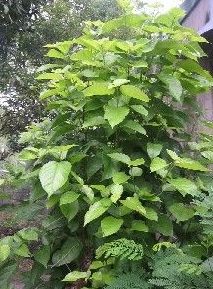
The tree needs to be pruned every now and then to be manageable, since it grows very tall. It also bears flowers that look like tiny green berries when they’re still buds. Tanglé is also reputed to have medicinal properties, almost always with leaves boiled as for a tisane. Although I haven’t seen lab results (unlike lagundi, which has been well-researched and is now packaged into capsules), I know it is proven to relieve coughs and colds.
For me however, the most important use of tanglé is as an aromatic herb. I am not sure how to approximate the scent but it has notes of musky lemongrass. Hmmm… not a very accurate description but I thought if scents had voices, this would somehow be a baritone lemongrass but not quite. Hahaha! Sorry, I’ll try to sniff it more and describe it later.


 The Pilgrim's Pots and Pans
Leave a reply to Salé / Tanglad / Lemon grass – The Pilgrim's Pots and Pans Cancel reply